
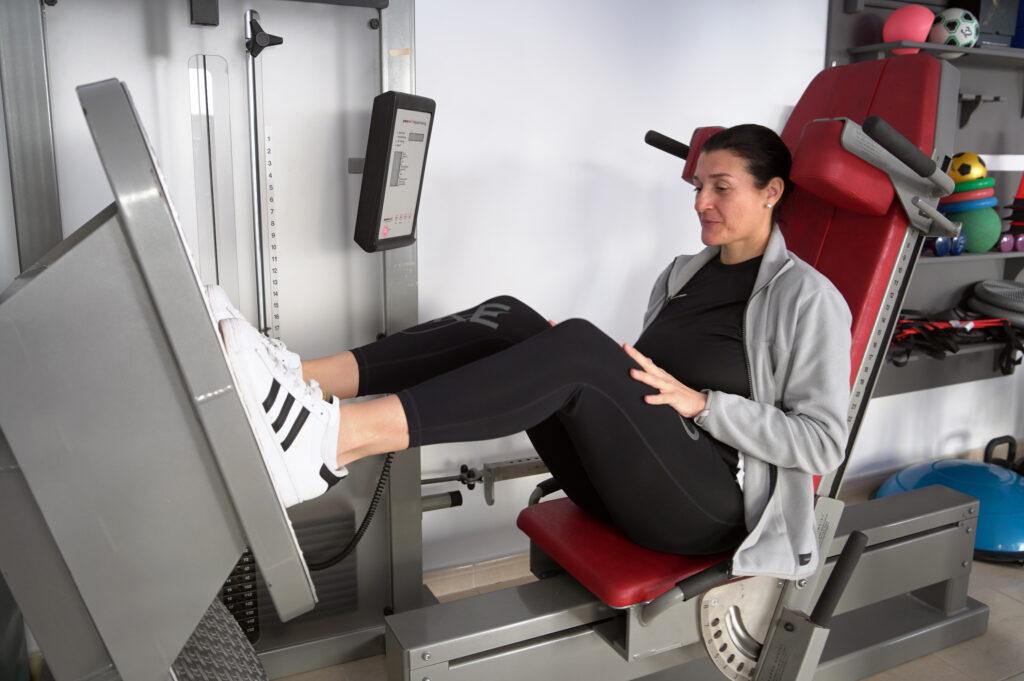
Post-exertional malaise, often shortened to PEM, is a worsening of symptoms after physical, mental or emotional exertion. It is commonly reported by people with Long COVID and can occur even after activities that would previously have felt easy. Importantly, PEM is more than simply feeling tired after a busy or active day. Symptoms can become noticeably worse after exertion and may interfere with everyday activities and recovery.
For someone experiencing PEM, finding the right balance between activity and recovery can therefore be challenging. Doing too much may trigger a significant increase in symptoms, while avoiding activity altogether can also make it difficult to understand what your body can currently manage. Professional rehabilitation can help you identify your individual capacity and find a more controlled way to approach activity. At Medifit Reha, this is part of a personalised Long COVID rehabilitation programme in which your symptoms, physical capacity and recovery rate guide the programme.
What does post-exertional malaise feel like?
PEM can occur after different forms of exertion. Physical activity such as walking or exercising can be a trigger, but exertion does not necessarily involve sport. Concentrating for a long period, working on a computer, having a demanding conversation or dealing with emotional stress can also require considerable energy.
The characteristic feature is that symptoms become worse following the activity. This deterioration may not happen immediately. According to the CDC, symptoms associated with PEM typically worsen 12 to 48 hours after activity and can persist for days or sometimes weeks. Depending on the individual, this worsening can include:
• increased fatigue or exhaustion
• more difficulty concentrating or thinking clearly, often described as brain fog
• dizziness or light-headedness
• headaches or sleep problems
• increased shortness of breath or other existing Long COVID symptoms
PEM does not look exactly the same for everyone. The type of activity that triggers symptoms, the amount of activity someone can tolerate and the time required to recover can differ considerably.
What is the difference between PEM and normal tiredness after exercise?
Normal tiredness after exercise generally reflects the effort you have made. You may feel tired or notice that your muscles have worked, but this usually improves with normal rest and recovery. With post-exertional malaise, the response can be disproportionate to the activity itself.
For example, a relatively small amount of physical or mental activity may lead to a marked worsening of fatigue, brain fog, dizziness or other Long COVID symptoms. The delayed nature of PEM can make this especially difficult to recognise. You might feel reasonably well while performing an activity and only notice the consequences later that day or the following day. This makes monitoring your response after activity just as important as monitoring how you feel during it.
Why can physical, mental and emotional exertion trigger PEM?
Exertion is broader than exercise. Your body uses resources during physical movement, but concentrating, processing information and dealing with emotional demands can also be taxing when you are recovering from Long COVID. Someone may therefore tolerate a short walk but struggle after several hours of concentrated work, while another person may experience a different pattern.
Understanding these individual patterns is an important part of managing post-exertional malaise. Rather than looking only at how many minutes you can exercise, it can be helpful to consider your total daily load and how your symptoms respond afterwards. This provides a clearer picture of your current capacity and can help reduce repeated cycles of doing too much followed by a significant increase in symptoms.
Why is exercising more not always the answer with Long COVID?
Recovery from Long COVID should not automatically be approached as a conventional fitness programme in which you simply increase exercise every week. When PEM is present, pushing beyond your current capacity may worsen symptoms rather than produce the response you would normally expect from training. This is why recognising and avoiding overexertion is important. The CDC specifically identifies PEM as a condition that may require symptom management in people with Long COVID.
This does not mean that every person with Long COVID should avoid physical activity. It means that activity needs to be considered in relation to your individual symptoms, limitations and recovery response. Medifit Reha uses individually determined exercise zones during its Long COVID rehabilitation programme and aims to avoid overexertion. The programme is continuously evaluated and adjusted according to the patient’s capacity, symptoms and recovery rate.
How can you avoid overexertion with post-exertional malaise?
A useful starting point is learning to recognise what your body can currently tolerate. This includes noticing not only symptoms during an activity, but also changes that occur hours later or the following day. Energy management, often referred to as pacing, can help you organise activities and recovery around your current capacity rather than repeatedly exceeding it.
For someone with PEM, this may involve planning demanding activities more carefully, alternating activity with recovery and adjusting the intensity or duration when symptoms indicate that the current load is too high. The aim is not to follow a rigid exercise target. It is to understand your response and make informed adjustments that reduce the risk of overloading yourself.
How does Medifit Reha approach PEM and Long COVID rehabilitation?
At Medifit Reha, Long COVID rehabilitation begins with an assessment of your personal situation. The programme can include a medical intake, pulmonary function and fitness testing, nutritional consultation, psychological evaluation and assessments by physiotherapy and occupational therapy. Based on these findings, the multidisciplinary team develops a programme that reflects your symptoms, current capacity and recovery rate.
Depending on your needs, rehabilitation can include physiotherapy, breathing training, occupational therapy and energy management, psychological support, medical training, relaxation techniques and education about self-management and recovery strategies. Treatment takes place under medical supervision and is evaluated and adjusted throughout the programme. Medifit Reha’s multidisciplinary team works closely together, with regular multidisciplinary consultation allowing the rehabilitation approach to respond to changes in your situation.
How is activity built up during Long COVID rehabilitation?
The starting point is your current capacity, not the level of activity you think you should be able to achieve. Medifit Reha assesses symptoms, physical capacity, breathing function and recovery limitations to help determine an appropriate rehabilitation plan. Training is performed within controlled exercise zones, with the explicit aim of avoiding overexertion and symptom aggravation.
Progression can therefore be adapted as your response becomes clearer. Instead of assuming that more exercise is always better, the team can evaluate how you respond and adjust the programme accordingly. This personalised approach is particularly relevant when symptoms fluctuate or when the effects of exertion only become apparent later.
Can rehabilitation help you understand your limits?
Understanding your limits is not necessarily the same as accepting them as permanent. During rehabilitation, learning what triggers symptoms can provide useful information for decisions about exercise, daily activities, work and recovery. It can also help you recognise when a particular activity is manageable and when the total load is becoming too high.
At Medifit Reha, this process combines professional assessment with education and self-management. The goal is to help you understand your current capacity and work step by step within an individually tailored programme. The on-site Long COVID programme at Medifit La Sella in Spain can be followed by online aftercare, allowing guidance and personalised recommendations to continue after your stay.
When should you consider professional Long COVID rehabilitation?
If relatively small amounts of physical, mental or emotional activity repeatedly lead to a clear worsening of your symptoms, it may be useful to discuss this pattern with a healthcare professional. This is particularly relevant when fatigue, brain fog, dizziness or other symptoms make it difficult to judge how much activity you can safely manage.
Medically supervised rehabilitation can provide a structured setting in which your symptoms, capacity and response to activity are assessed together. Medifit Reha offers a personalised, multidisciplinary Long COVID rehabilitation programme at its rehabilitation centre in Spain, followed by continued guidance after the on-site phase. If you want to find out whether this approach matches your situation, contact Medifit Reha for more information or request an intake consultation.
