
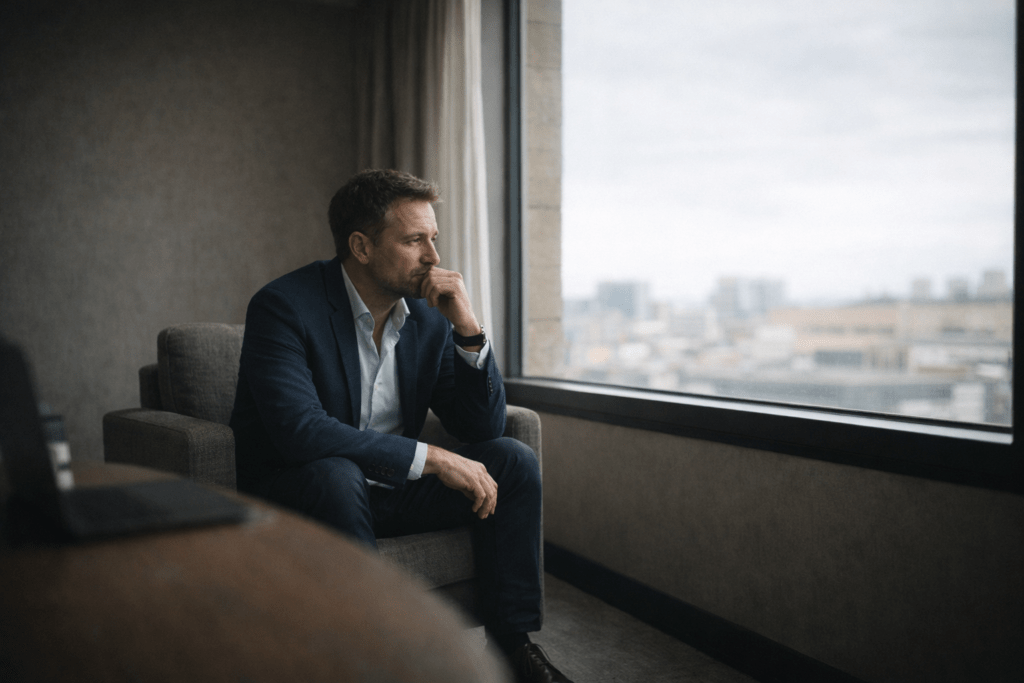
You finally stopped.
You took time off.
You cleared your calendar.
Maybe you even went on holiday, genuinely hoping that once the pressure lifted, you’d feel like yourself again.
But somehow… that didn’t quite happen.
You’re less busy, yes. But still tired. Still foggy. Still not fully there.
If that’s where you are, let’s be clear about one thing straight away:
this doesn’t mean you’re doing recovery wrong. It usually means that burnout isn’t just about needing rest.
When Rest Doesn’t Work, It’s Not a Willpower Problem
Rest works well for ordinary fatigue — the kind that follows a demanding week or a short period of poor sleep. Burnout is different. It develops gradually, as the result of prolonged stress rather than brief episodes of pressure. Over time, constant responsibility and high expectations keep the nervous system in a state of alert.
When that happens, stopping work doesn’t automatically lead to recovery. The body doesn’t simply “switch off” because it has adapted to staying on guard. This is why many people with burnout report feeling wired despite resting, waking up tired after sleep, or noticing little improvement even after slowing down. These responses are not a lack of effort or resilience, but well-documented physiological reactions to long-term stress.
Why Holidays Often Help… Then Don’t
Holidays reduce pressure.
They remove deadlines, meetings and immediate demands.
What they don’t always do is restore resilience.
That’s why many people feel a brief lift, followed by a familiar crash once normal life resumes. This can be deeply frustrating:
“I’ve done what everyone says I should do. Why am I still not better?”
The problem isn’t the holiday.
It’s expecting a pause to undo long-term overload.
When Burnout Becomes Chronic
Burnout doesn’t always look dramatic. In fact, among executives, it often hides behind competence.
You might still be performing, still delivering — just at a much higher internal cost.
Common long-term burnout symptoms include:
- Fatigue that doesn’t improve with rest
- Difficulty concentrating or making decisions
- Sleep that isn’t refreshing
- Physical symptoms such as tension, headaches or digestive issues
- Feeling emotionally flat or disconnected
None of this means you’re broken.
It means your system needs a different approach.

What Actually Helps Recovery
Burnout recovery isn’t about pushing through — and it isn’t about withdrawing completely either.
For many people, progress starts when recovery becomes structured, rather than passive — often through a structured burnout recovery programme that addresses both physical and mental aspects.
This often involves:
- Gradually regulating the nervous system
- Reintroducing movement and activity safely
- Rebuilding tolerance to stress instead of avoiding it entirely
The aim isn’t to do more.
It’s to help the body feel safe enough to recover.
A More Effective Way to Approach Burnout
An increasing number of professionals are recognising that burnout recovery is most effective when it’s approached as a whole-system issue. Rather than focusing only on symptoms, this means understanding how long-term stress has affected the body and addressing physical, neurological and mental factors together. For some people, stepping out of their usual environment — even temporarily — can help create the conditions needed to reset unhelpful patterns. What matters most, however, is not the location itself, but the quality of professional support and the structure of the recovery process.
Common Questions About Burnout Recovery
Burnout recovery works best when it’s treated as a whole-system issue, often through a multidisciplinary rehabilitation approach that looks beyond symptoms alone.
In Closing
If rest alone hasn’t fixed your burnout, it doesn’t mean you haven’t tried hard enough.
More often, it means your body has been under pressure for too long — and needs a more intentional way back to balance.
Recovery is possible.
But it usually requires more than simply stopping.
Burnout often improves when recovery is approached with the same seriousness as performance.
If you recognise yourself in this, it may be worth discussing your situation with a specialised team and exploring whether a more structured, personalised recovery approach could help.
